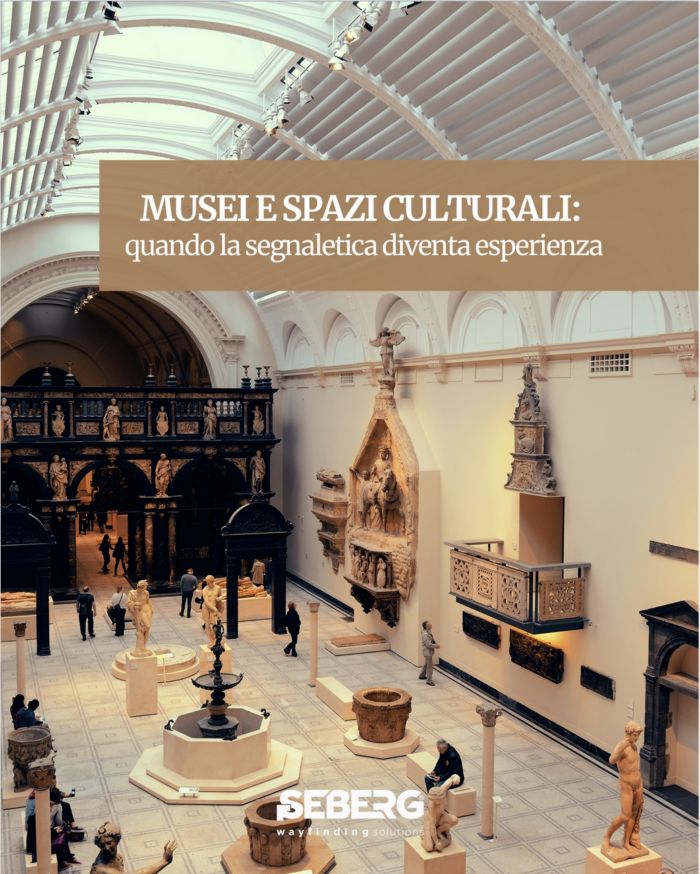
Experiential signage for museums and cultural spaces

In museums and cultural spaces, signage isn’t a technical element: it’s part of the visitor experience.
It helps with orientation, but above all, it contributes to the narrative of the place.
For this reason, the structures must respect the architecture, integrate with the visual identity, and ensure materials and proportions that don’t disrupt the enjoyment of the works.
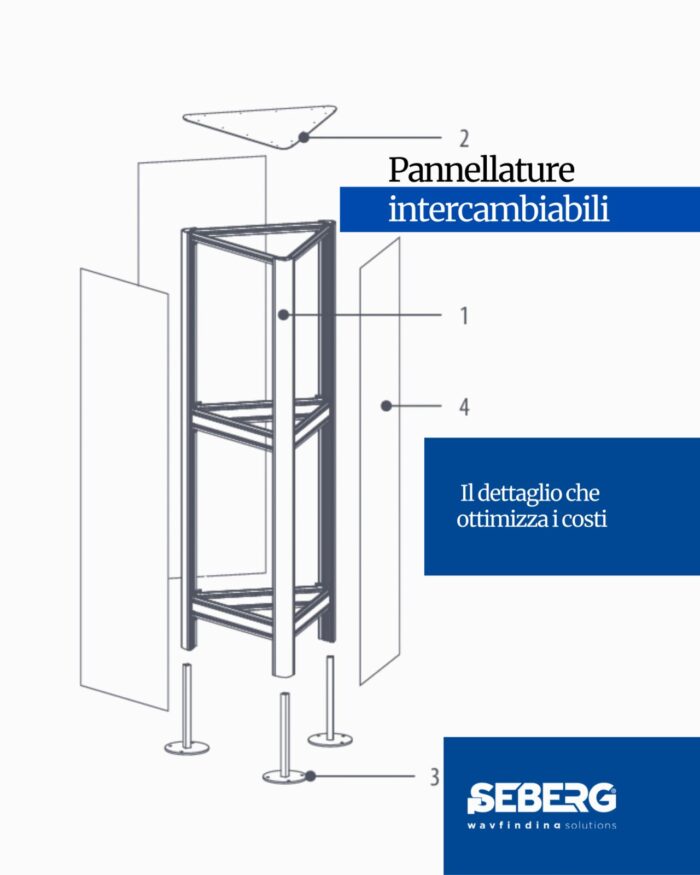
Interchangeable panels

Interchangeable panels represent a simple and strategic solution: they allow you to update your visual communication without replacing the entire structure.
This means:
• lower recurring costs
• rapid updates

Modularity in urban wayfinding

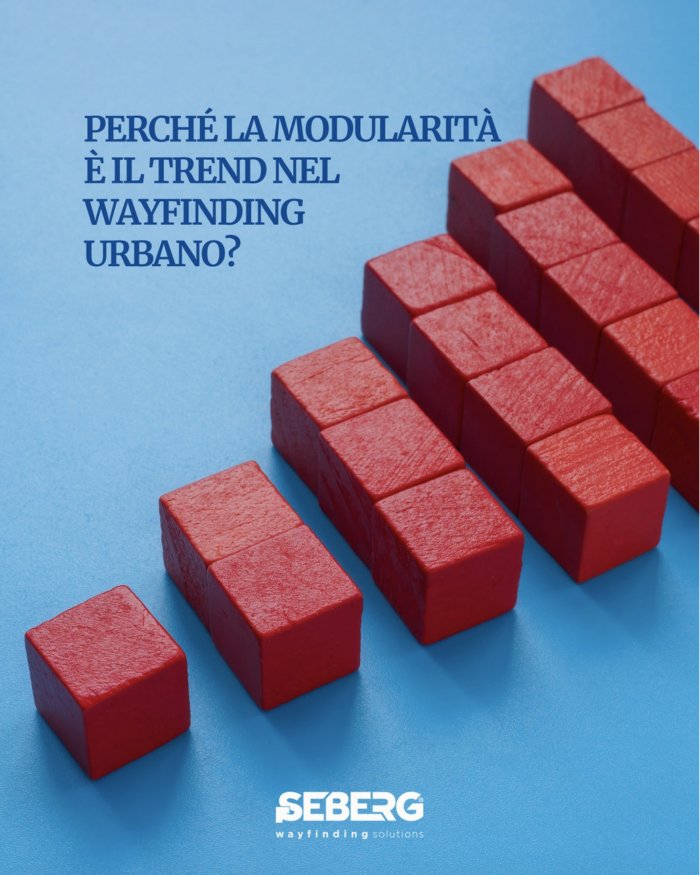
Modularity will be one of the most significant trends in urban wayfinding systems in 2025.
Cities are changing, spaces are transforming, and signage must be able to adapt without becoming a constant cost or an inconsistent element.
Modularity allows you to update panels, graphics, and directions without replacing the structures.
This means durability, sustainability, and urban responsiveness.

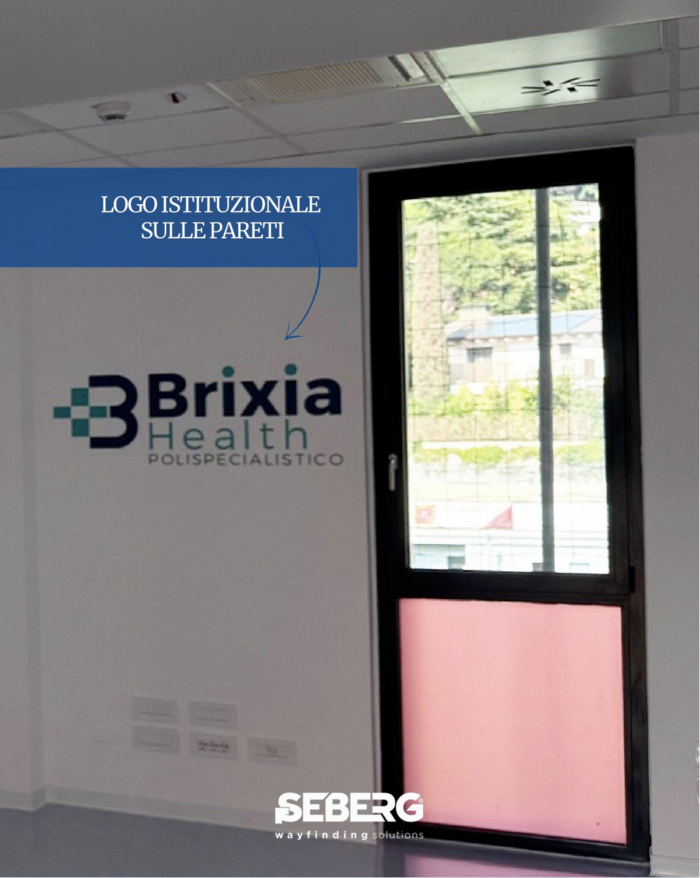
Integrated visual communication system, new Brixia Health headquarters, Brescia

What distinguishes functional signage from signage that truly improves the patient experience?
For the new Brixia Health – Polyclinics location in Brescia, we designed and installed a complete, coordinated visual communication system, carefully following their brand guidelines.
The goal was clear: to ensure immediate orientation, reduce travel times, and create a consistent, legible, and professional environment.
What we achieved:

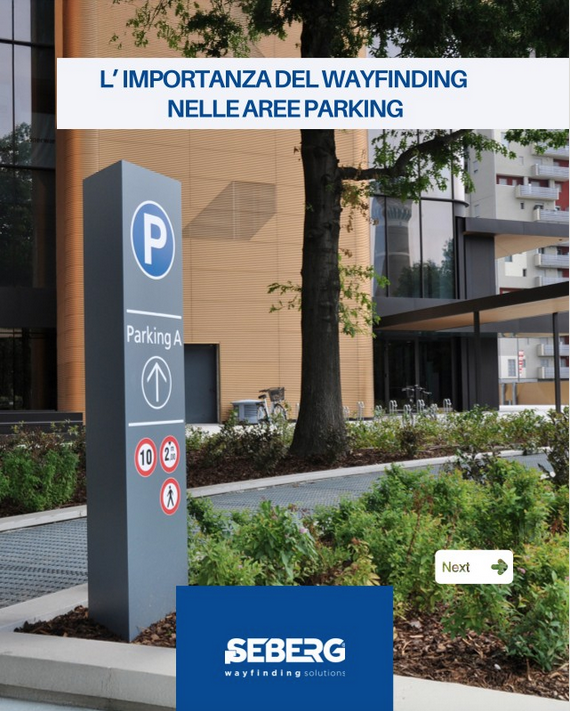
The importance of wayfinding in parking areas

Clear signage isn’t a detail, but a key to efficiency.
In parking areas, wayfinding reduces travel times, improves safety, and optimizes the user experience.
Seberg systems combine design, readability, and durability,
ensuring intuitive orientation even in the most complex spaces.
Customizable structures in terms of colors, dimensions, and materials,
designed to integrate with the architecture and stand the test of time.

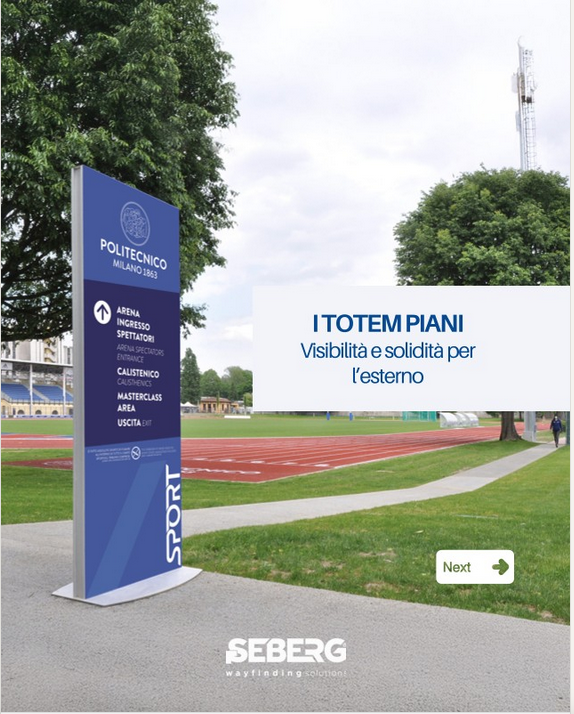
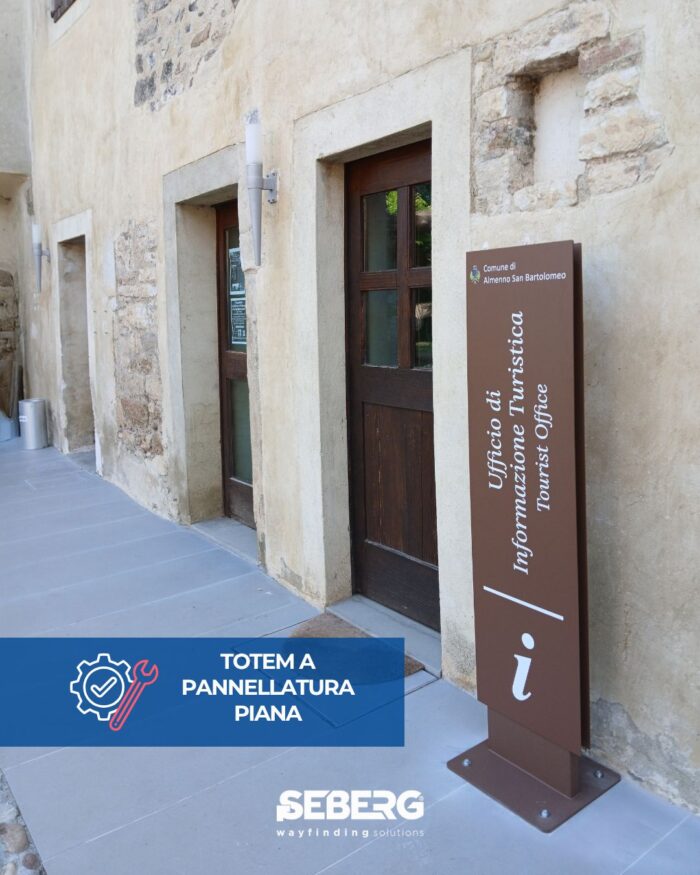
Flat panel totem

Elegant totem ideal for tourist signage and for insertion in historical contexts. Flat panel totem made of aluminum sheets and a steel load-bearing frame. For outdoor use, robust, and resistant to weather and vandalism.

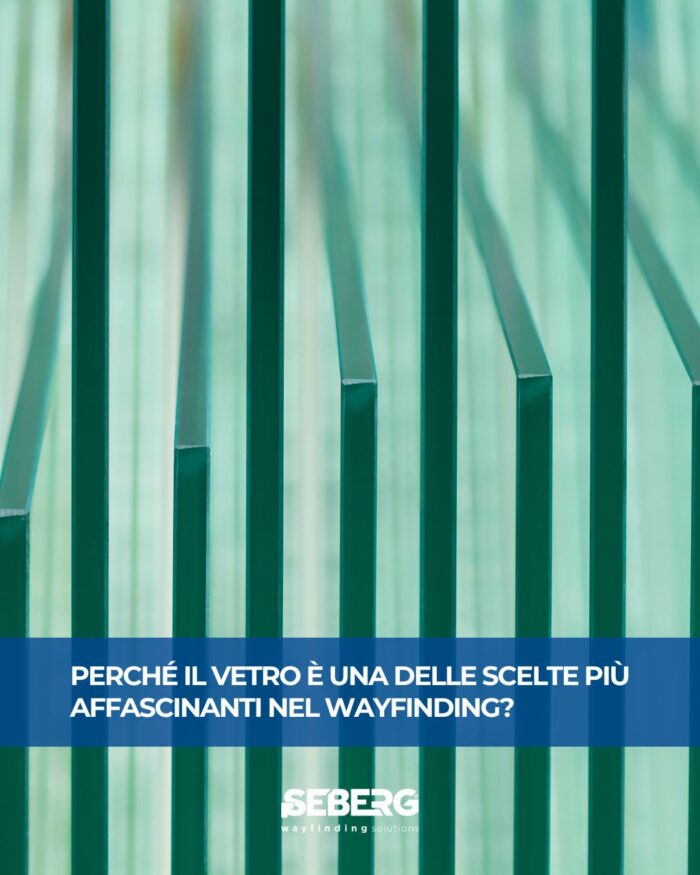
Glass in wayfinding, synonymous with elegance

Glass is not just an architectural material, but a true strategic ally in wayfinding.
Its ability to blend in with its surroundings without weighing it down allows for the creation of elegant, durable, and functional signage.

In highly complex contexts – such as airports or shopping centers – it becomes a solution capable of combining communicative clarity and aesthetic harmony.

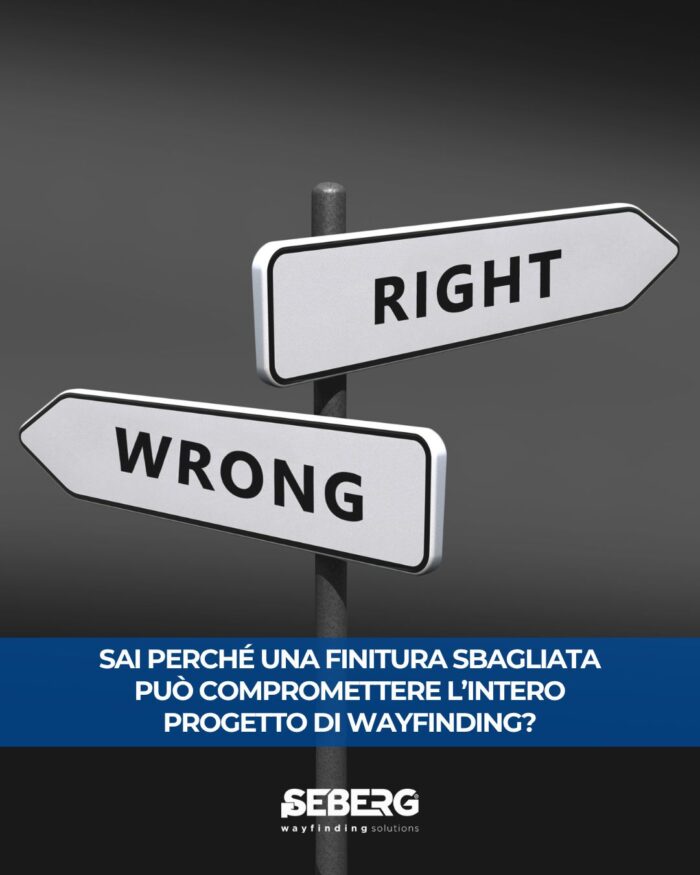
Pay attention to the finishes!

Do you know why finishes are crucial in a wayfinding project? Very often they are perceived as a marginal detail, a secondary aspect compared to the overall design or the position of the signs. In reality, the choice of finishes determines the entire life cycle of the project: it affects the sustainability of the materials,