Wayfinding as a branding tool

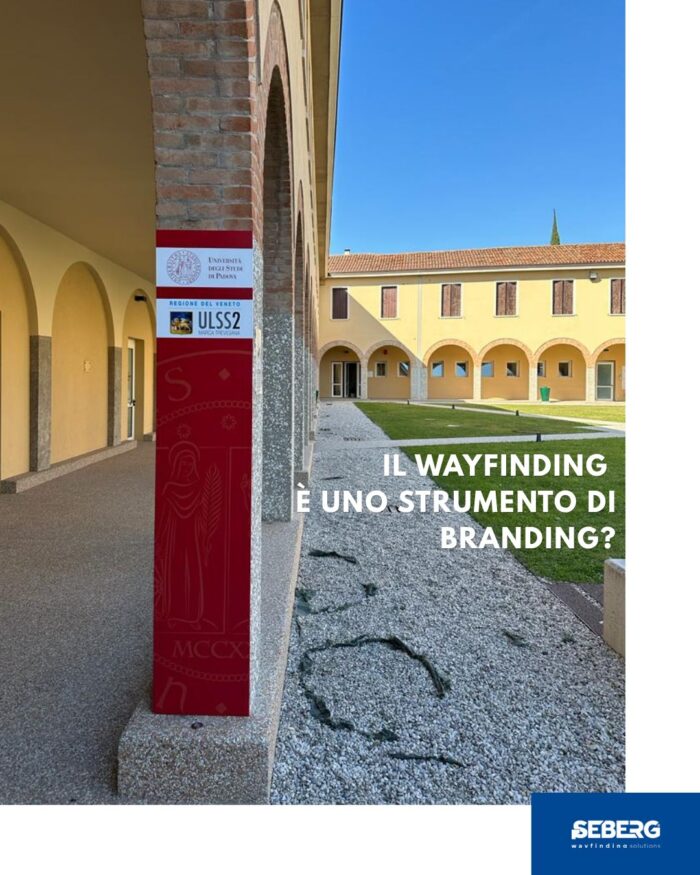
A company’s brand doesn’t just exist in its logo. It lives in the spaces where people work every day.

Colors, materials, typography, coherence from one floor to the next: every element communicates something—to those who work there, to those who visit, to those who enter for the first time.

A custom-designed wayfinding system transforms hallways, reception areas, and common areas into an extension of your corporate identity.
Did you know that…

Wayfinding in a Nutshell – The 3-Second Rule

In high-traffic environments, a sign has about 3 seconds to communicate the correct direction.

This isn’t a randomly estimated time: it’s the margin within which the user decides whether to proceed or hesitate. Beyond that threshold, the system has already failed.

For this reason, the design focuses on typographic hierarchy, color contrast, and information load reduction—every additional element is a potential slowdown.

Terminal signage

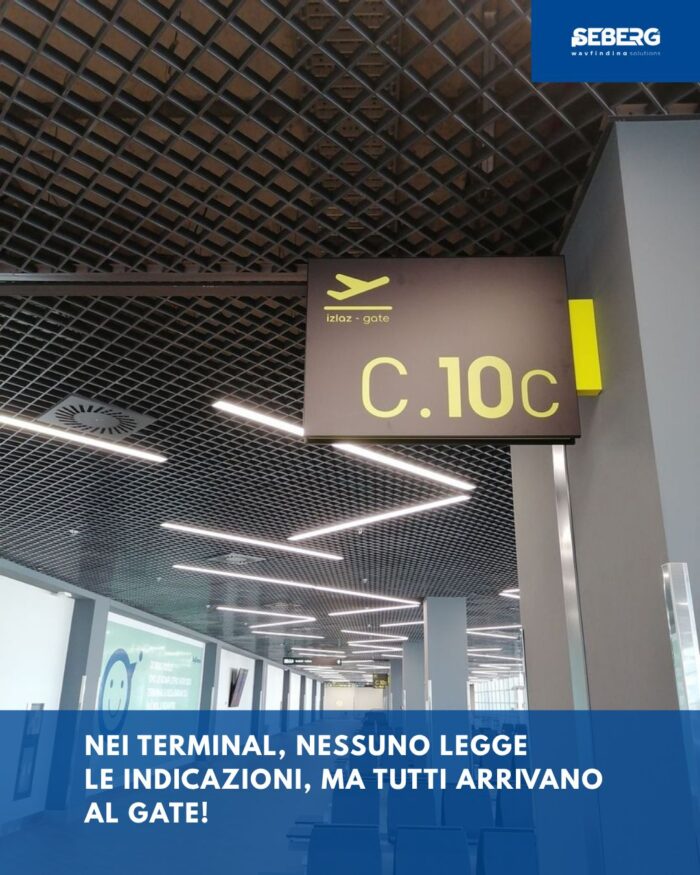
In the terminal, no one reads the signs. Yet everyone arrives at the gate.

You’re running to the gate. Your flight is in twenty minutes, the terminal is huge, and you don’t speak the language. You look up and read the signs. You reach the gate.

Visual hierarchy, color contrast, placement at decision points: every element is where it needs to be, before you even need it.

The best wayfinding is the one you don’t notice. But if it were missing, you would immediately notice it.

We develop customized solutions for national and international projects.
If you are developing a complex project, let’s talk about it

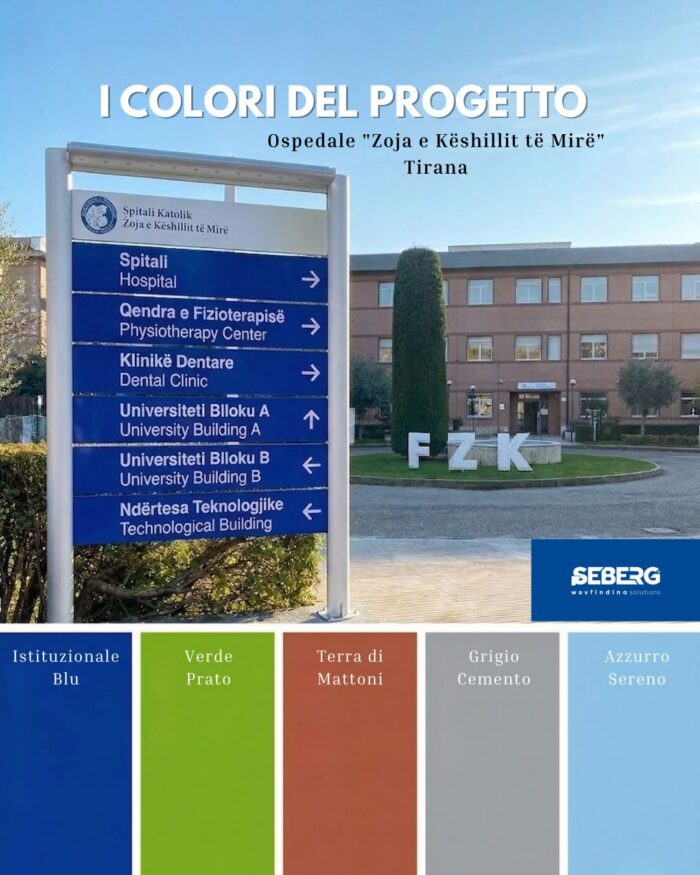
Color is not just decoration

In wayfinding, color isn’t decoration.
When designing a signage system for a complex structure, color choice is one of the first strategic decisions.
Each color has a specific role: – institutional blue creates hierarchy and recognition – light shades improve readability from a distance and in varying lighting conditions – grays and neutral tones ensure consistency with existing architectural materials.